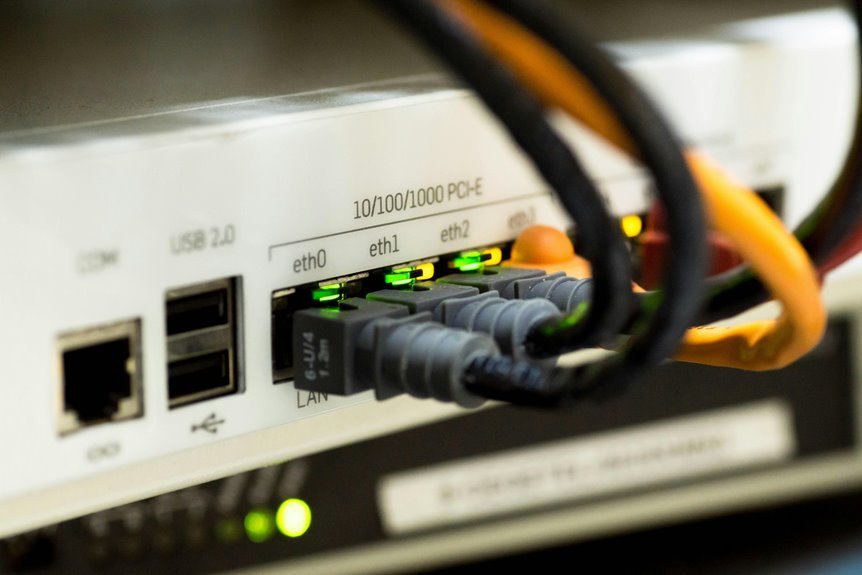

Advanced internet infrastructure serves as a backbone for societal stability, facilitating essential communication and economic activities. Technologies such as 5G and fiber optics enhance connectivity and network resilience. This infrastructure not only reduces downtime but also promotes digital equity, ensuring inclusivity in the digital economy. As the landscape evolves, understanding the implications of these advancements becomes crucial for future developments. What strategies will emerge to meet the growing demands of an interconnected world?
The Importance of Advanced Internet Infrastructure for Stability
Advanced internet infrastructure serves as a foundational pillar for societal stability, facilitating seamless communication, economic transactions, and access to information.
Its role in enhancing network resilience ensures that systems withstand disruptions, maintaining continuous connectivity.
Furthermore, promoting digital equity allows all individuals, regardless of socioeconomic status, to access these resources, fostering an informed citizenry and enabling equal participation in the digital economy, which is crucial for a free society.
Key Technologies Driving Robust Internet Connectivity
As the digital landscape evolves, several key technologies emerge as critical drivers of robust internet connectivity.
5G networks enhance data transmission speeds, while fiber optics provide high-capacity bandwidth.
Network redundancy ensures reliability, complemented by cloud computing for scalable resources.
Edge computing reduces latency, enabling faster data processing.
Additionally, IoT integration facilitates seamless communication between devices, fostering a more interconnected and efficient digital ecosystem.
Strategies for Reducing Downtime and Enhancing Reliability
Implementing effective strategies to reduce downtime and enhance reliability is crucial for maintaining optimal internet infrastructure.
Utilizing cloud redundancy ensures that data remains accessible during outages, while enhancing network resilience through diversified pathways mitigates failure risks.
Regular assessments and proactive monitoring further strengthen these systems, ensuring continuous performance.
Together, these strategies empower users, fostering an environment conducive to freedom and uninterrupted connectivity.
Future Trends in Internet Infrastructure for a Connected World
The evolution of internet infrastructure is increasingly shaped by emerging technologies and user demands, driving innovations that promote connectivity on a global scale.
Future trends will focus on 5G deployment for enhanced speed, IoT integration for seamless device communication, and robust cybersecurity measures to protect data integrity.
Additionally, network resilience will become paramount, ensuring stability amid growing digital complexities and vulnerabilities.
Conclusion
In the grand tapestry of society, advanced internet infrastructure serves as the sturdy loom, weaving together strands of communication, commerce, and community. Just as a resilient bridge withstands the torrents of a storm, this infrastructure bolsters stability amid the chaos of an evolving digital landscape. As we navigate the currents of innovation and connectivity, investing in these technologies will ensure that the fabric of society remains intact, fostering a future where all can thrive in the interconnected world.


 By
By




 By
By